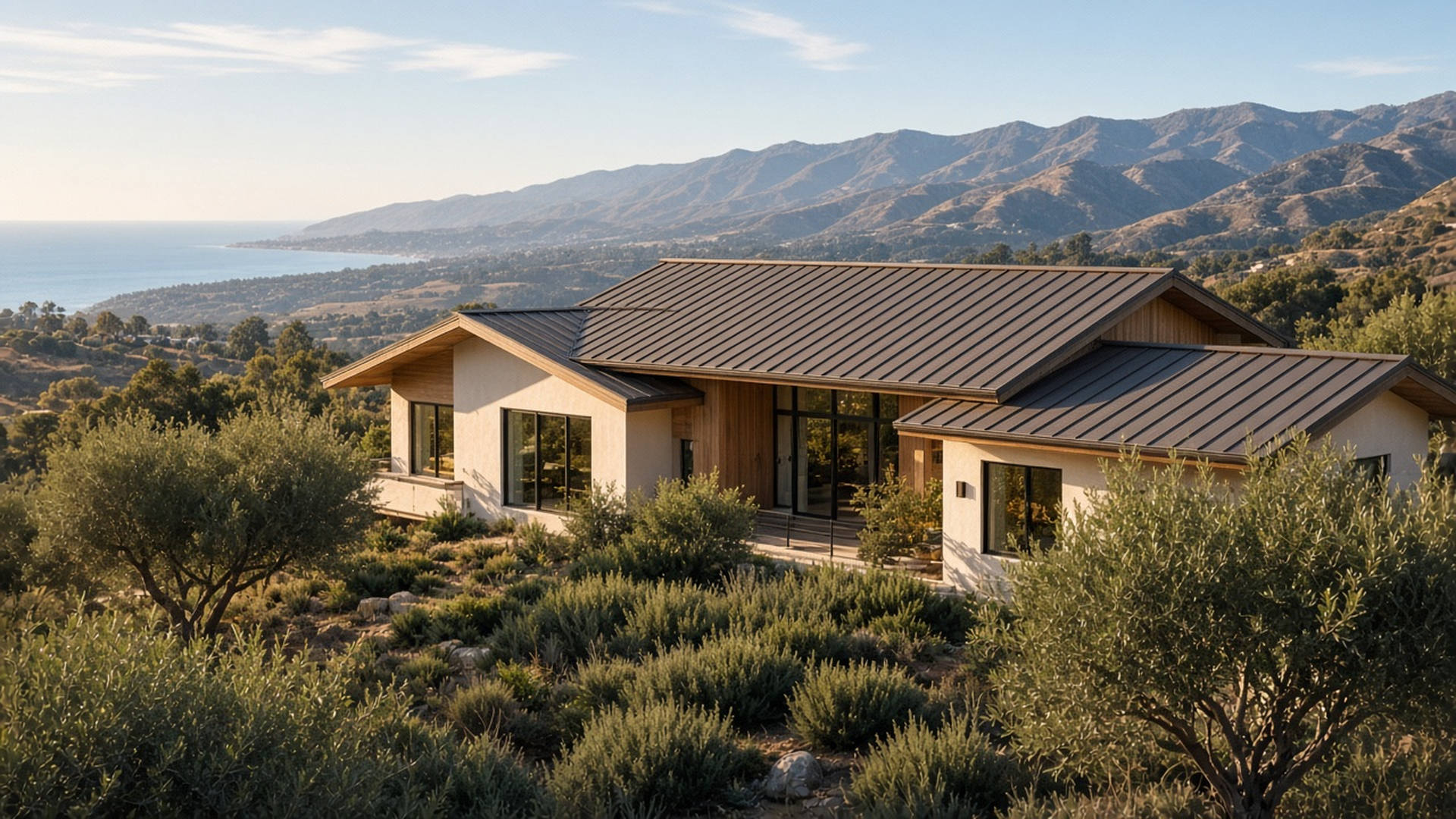
A Clean, Concealed-Fastener Roofing System
Standing Seam Metal Roofing Services in Santa Barbara
Discuss the right standing seam system for your roof. Get a Free Estimate
A Clean, Concealed-Fastener Roofing System
Discuss the right standing seam system for your roof. Get a Free Estimate
Standing seam metal roofing is a panel-based roofing system recognized by its raised seams and generally concealed fasteners. Instead of relying on exposed screws across the visible roof surface, the panels connect through formed seams that create a continuous appearance. This construction can provide a neat architectural finish while allowing the roofing system to accommodate the movement that occurs as metal expands and contracts with temperature changes.
For Santa Barbara properties, choosing the right system involves more than selecting a panel color. Coastal exposure, roof pitch, building design, underlayment, drainage, ventilation, and the detailing around roof penetrations all influence performance. We help property owners understand these considerations so they can make informed decisions about their roofing project.
A standing seam roof is made up of individual metal panels with raised connecting edges. Those seams help shed water and give the roof its distinctive appearance. Different panel profiles and attachment methods are available, and the right choice depends on the building, roof geometry, exposure, and manufacturer's requirements.
Many standing seam systems use clips or concealed attachment details to secure panels to the roof structure. This avoids a large number of exposed fasteners on the finished roof surface. The clip arrangement must allow for the movement required by the selected panel system.
Standing seam panels are available in different widths, seam heights, and connection designs. These differences affect the roof's appearance, installation method, and suitability for particular slopes and building layouts. The profile should be selected according to system specifications rather than appearance alone.
Metal type and coating selection are especially important in a coastal region. Exposure to salt, moisture, sunlight, and airborne contaminants should inform the choice of a compatible roofing material and finish. Accessories and flashing materials also need to be compatible with the main roof system.
The roof must be detailed where panels meet walls, chimneys, skylights, vents, valleys, gutters, and edges. These transitions are critical to managing water. A sound design considers these areas as part of the roofing system instead of treating them as minor finishing work.
We concentrate on standing seam roofing and the details that distinguish it from other metal roof designs.
We consider roof shape, slope, framing, exposure, and existing materials before discussing a suitable panel system.
We explain the practical differences between panel profiles, finishes, seams, and fastening approaches.
We keep flashing, drainage, underlayment, ventilation, and roof penetrations in the conversation from the beginning.
Start with a conversation about your property's roof design and standing seam options.
Free — no obligations
We begin with the building's location, roof layout, existing materials, slope, and the goals for the new roofing system.
The planning process considers the roof structure, water management, underlayment, ventilation, edge conditions, and penetrations. Any applicable local building requirements and manufacturer specifications must also be considered.
We explain suitable standing seam panel options, metal and finish considerations, and the differences between connection and attachment methods.
The installation plan accounts for roof preparation, panel layout, flashing, transitions, and site conditions so the components work together as a system.
The finished work should be reviewed for the visible panel installation and the important roof details that support water management and overall performance.